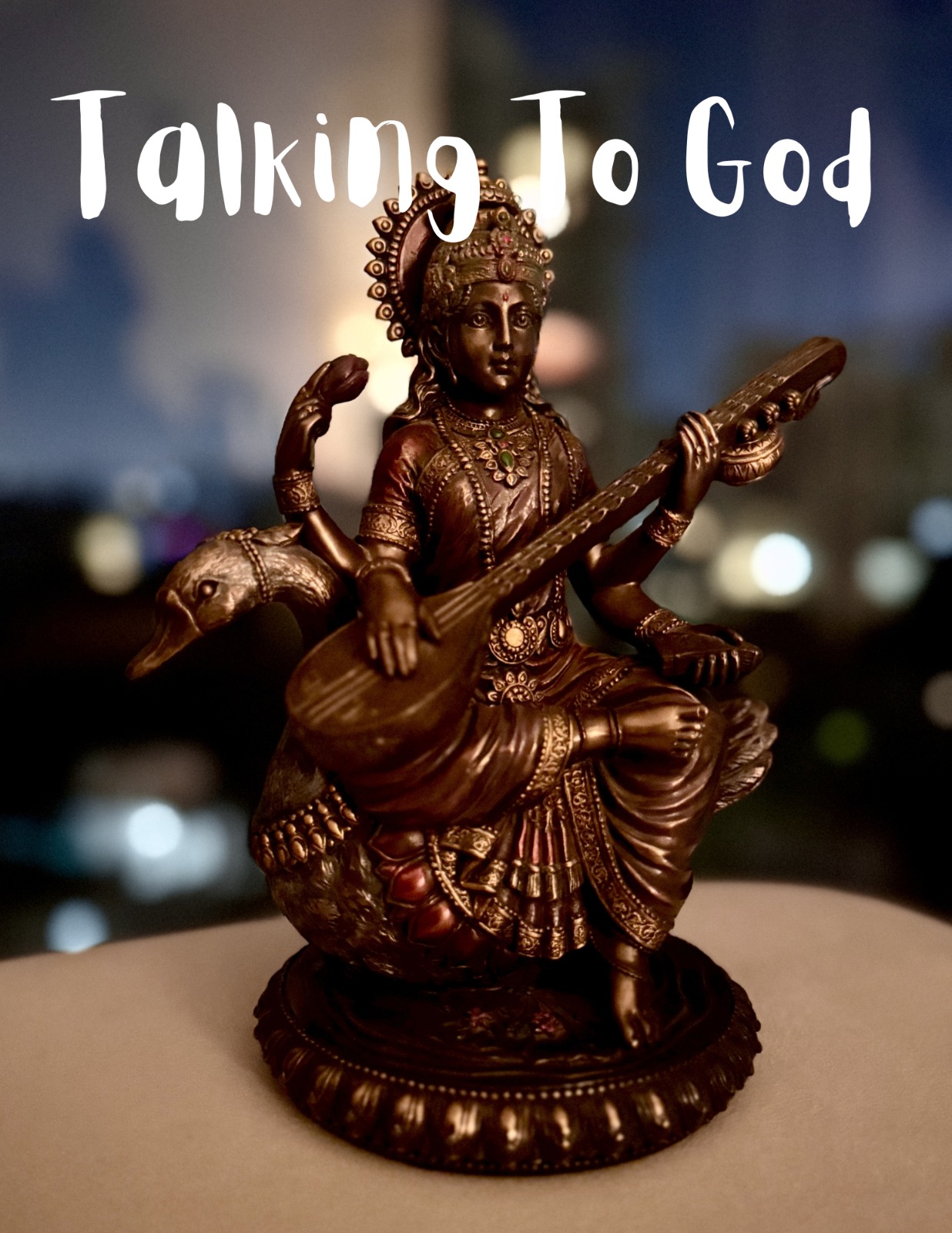
Nina, a queer Indian immigrant in her thirties, kneels in her New York bedroom in front of a small altar by the window. Outside, the city moves on. Inside, she stares at a statue of the Goddess Saraswati. She is crying, waiting for a response that never comes.
The film moves across three periods of Nina’s life, tracing her changing relationship with God.
As a child in Delhi, Nina is curious and open. Her grandmother teaches her that God is not something distant or controlled by others, but something she can speak to directly. Encouraged to form her own connection, young Nina begins talking to God in her own way. There is innocence and playfulness in this relationship, but also early doubt. As she begins to understand her feelings for another girl, she quietly wonders if being herself might mean losing that connection.
In her twenties, after her grandmother’s death, Nina’s faith begins to collapse. Standing in the same room that once felt warm and safe, she now faces the altar with anger and grief. She demands answers from a God who remains silent. At the same time, she’s feeling the pain of her life in the U.S. that has become increasingly isolating. She experiences xenophobia, sexism, and fear in public spaces. In private, she struggles with heartbreak and begins to rely on alcohol to cope. Her relationship with God shifts from trust to full blown resentment. The silence she once accepted now feels like betrayal.
In the present day, Nina is in recovery. During a meeting with her sponsor, she is asked to reflect on her understanding of a higher power. The question unsettles her, but it also opens something. Her sponsor offers a different perspective. God does not have to be a figure that controls or punishes. It can be something that exists alongside her, a presence rather than an authority. One that can be trusted, even when things don’t seem be going her way.
As her sobriety grows and memories of her childhood return, Nina begins to see her past differently. Her grandmother and sponsor’s perspectives on God merge into one resounding message: God is loudest in simple, daily magic; the warmth of sunlight on your face. She remembers her grandmother’s words, not as a promise that life would be easy, but as an invitation to keep talking, even without answers.
In the final moment, Nina sits once again before her altar, her late grandmother’s Goddess Saraswati now placed in her New York apartment. She is still unsure, still grieving, but no longer closed off. Instead of asking for proof or resolution, she makes the choice to surrender. She looks up and speaks the words of her younger self.
“Sup, God?”