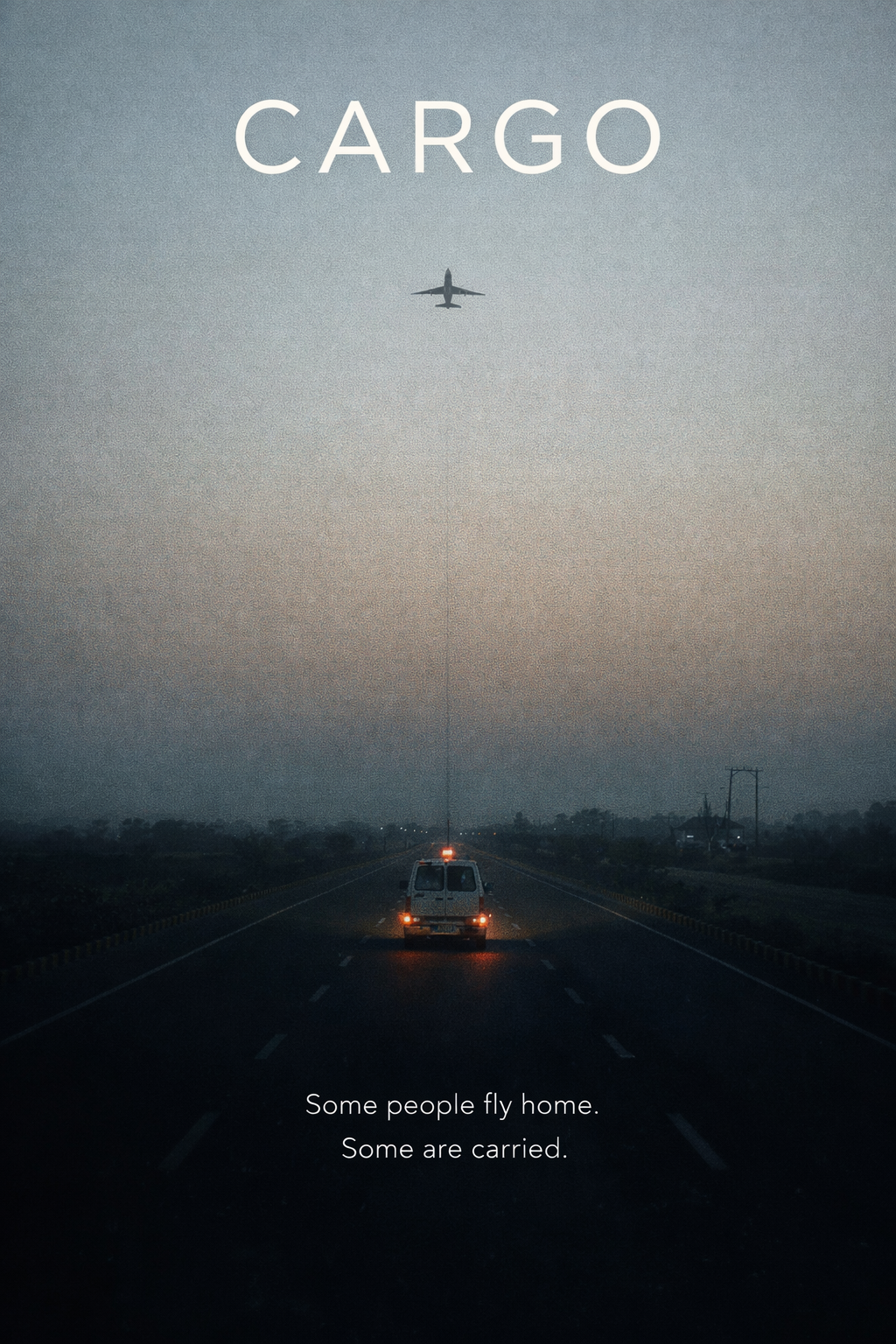
When twenty-one-year-old Parineeti Sharma dies in a Chennai hospital, the cause of death reads like a medical fact. What it does not say is that a doctor mismanaged her for four months, that the government TB registry he was legally required to notify was never told, that no deceased donor list existed, that a Padma Shri specialist reviewed her file and walked away, and that the only people who found a hospital that could save her were her college friends — twenty-one-year-olds on their phones at midnight, doing in hours what the system failed to do in months.
CARGO is the story of what comes after.
Priya, twenty-seven, has spent her life fighting for her younger sister. Every relative who commented on Parineeti's slight frame, every person who underestimated her — Priya was there. Parineeti called her Chotu because even though Priya was older, it was always Parineeti who kept everyone steady. She had internship offers in defence aerospace and lists of restaurants in cities she had not yet visited.
The film opens on the last good memory — two sisters on a sofa in winter, an old Bollywood film playing low, falling asleep on the floor. From there it moves through the cascade of failures: the misdiagnosis, the worsening jaundice, the midnight rush to a different hospital, the transplant tests that failed one by one, the relatives who went silent. It moves through the 4am when Priya fed her sister, combed her hair, dressed her, tied her shoes, and wheeled her to the hospital for the last time.
It moves through the moment a doctor showed Priya a flatline at 1:50am while her parents waited outside. Priya did not cry. She has not understood why since.
Then comes the journey home. Priya, her parents, and a cousin fly from Chennai to Varanasi while Parineeti travels in the cargo hold below. At the airport they sit at a food counter and eat while the world moves around them — announcements, children running, strangers laughing. Nobody knows. Nobody stops.
On the flight Priya plays a voice note — two minutes of her sister joking about a train journey, a nosy aunty, being too thin to be taken seriously as an engineer. The voice note ends. The engine hum returns.
Eight hours in an ambulance from Varanasi to Lucknow. No one speaks. Priya places her hand flat against the partition wall between her and her sister and holds it there in the dark.
When they arrive, the lane fills with relatives and noise. People who were absent now claim grief loudly. Priya stands in the middle of all of it, completely alone.
CARGO is about the loneliness of surviving a loss in a world that does not pause — not for the hospitals, not for the flight, not for the eight-hour road, not even for the moment you arrive home and find the world has already moved on.
Parineeti wanted to design aircraft. She would have.